
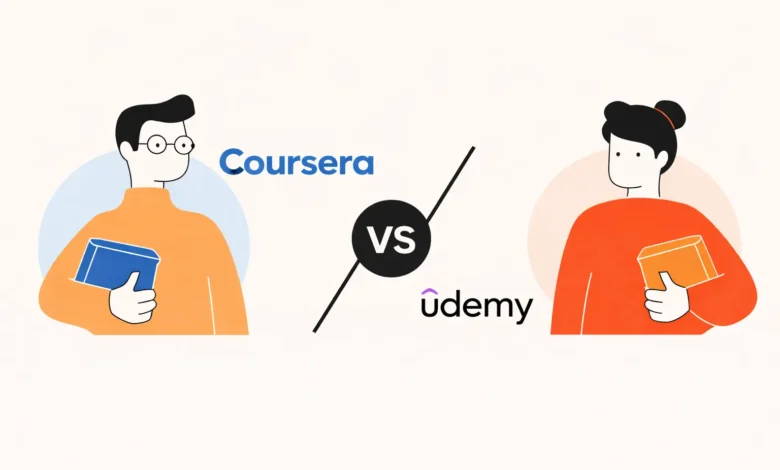
Choosing between Coursera vs Udemy can feel confusing. Both platforms promise career growth, new skills, and flexible online learning. But they work very differently.
If you want structured programs, university certificates, or even online degrees, one platform clearly stands out. If you prefer affordable one-time purchases and casual learning, the other might fit better.
After comparing features, pricing, course quality, support, and real-world value, here is a clear and honest breakdown to help you decide which one is better in 2026.
Quick Comparison Table
| Feature | Coursera | Udemy |
|---|---|---|
| Course Type | University & company-led programs | Individual instructor-led courses |
| Certificates | University & professional certificates | Certificate of completion |
| Pricing Model | Subscription + individual course purchase | One-time purchase per course |
| Free Content | Yes (audit mode) | Limited free courses |
| Degree Programs | Yes | No |
| Skill Depth | Structured & career-focused | Skill-based & practical |
| Refund Policy | 7–14 days depending on plan | 30-day refund |
| Best For | Career growth & credentials | Hobby & practical skills |
| Overall Value | High long-term value | Budget-friendly learning |
Coursera Overview
What Is Coursera?
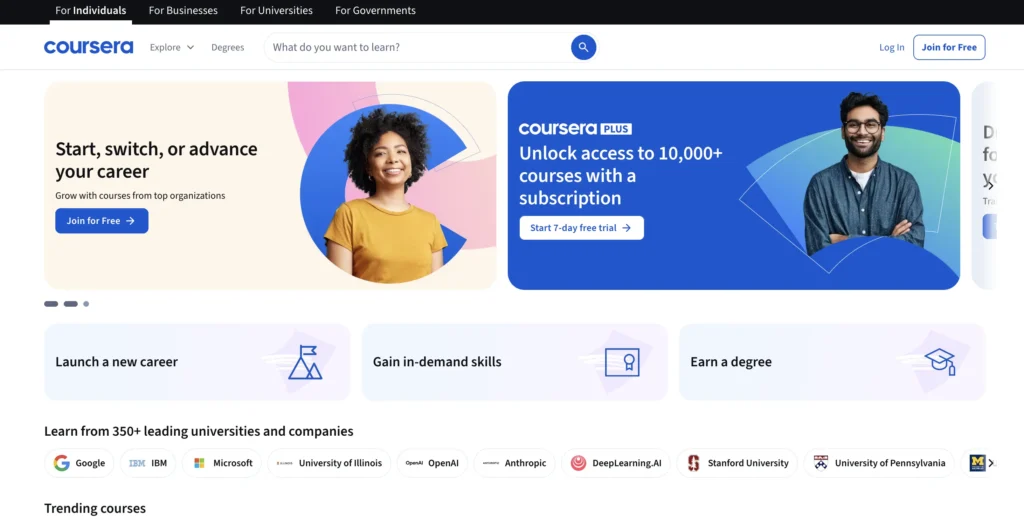
Coursera partners with top universities and companies like Stanford University, Google, and IBM to offer structured online programs.
It focuses on professional development, certifications, and accredited degrees.
Key Features
- University-backed certificates
- Professional certificate programs
- Guided projects
- Specializations
- Bachelor’s and Master’s degrees
- Financial aid options
- Mobile app learning
Pros
- Recognized certificates from universities
- Structured learning paths
- Strong career-focused programs
- High production quality
- Financial aid available
Cons
- More expensive than Udemy
- Some programs require subscriptions
- Deadlines for graded assignments
Coursera Pricing in 2026
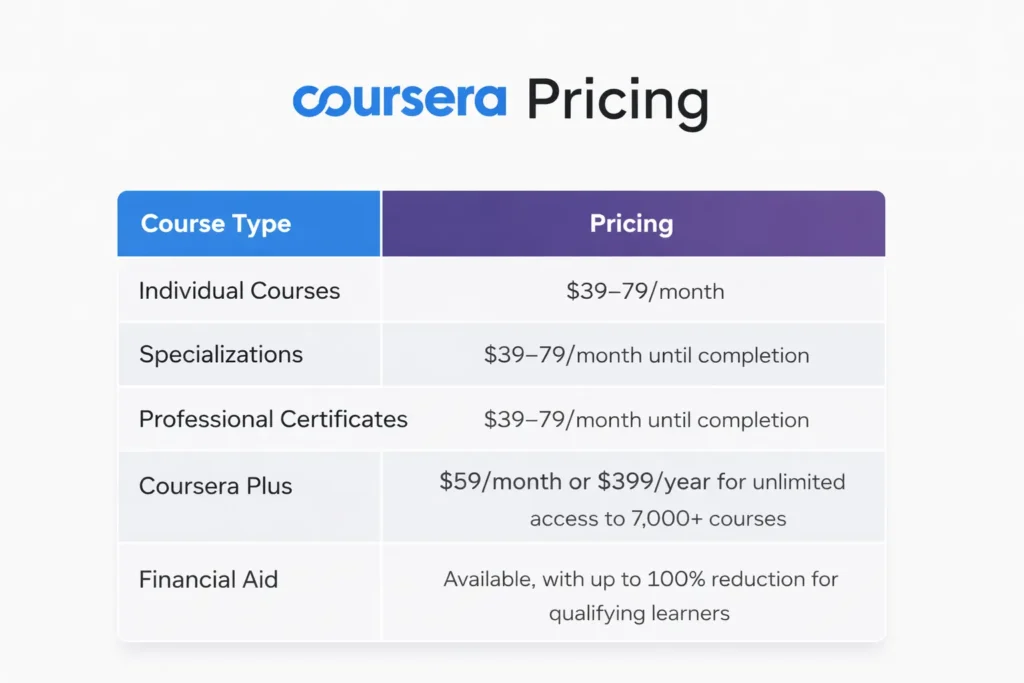
Coursera offers multiple pricing models:
- Individual course: $39 to $79
- Specializations: $39 to $79 per month
- Coursera Plus: Around $399 per year
- Degree programs: Several thousand dollars
Coursera Plus gives access to thousands of courses under one subscription. For serious learners, this often becomes more cost-effective than buying individual courses elsewhere.
You can check the latest discount for Coursera on our website. We regularly update working coupon codes for Coursera and Udemy.
Best For
- Students who want credible certificates
- Career switchers
- Professionals upgrading skills
- People seeking structured learning
Udemy Overview
What Is Udemy?
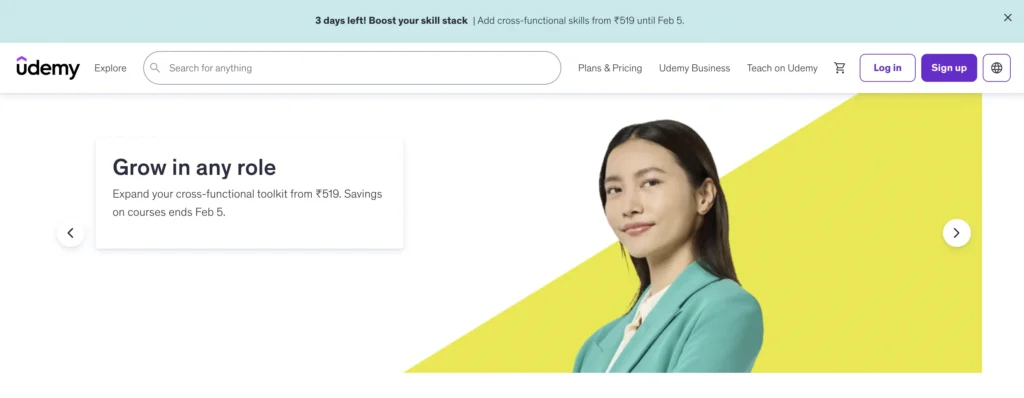
Udemy is an open marketplace where instructors create and sell courses independently. Anyone can publish a course, which means huge variety but mixed quality.
Key Features
- Over 200,000 courses
- One-time payment model
- Lifetime access
- Frequent discounts
- Wide range of topics
Pros
- Very affordable during sales
- Huge course selection
- No deadlines
- Good for practical skills
Cons
- Quality varies
- Certificates are not accredited
- No degree programs
- Limited structured pathways
Udemy Pricing in 2026
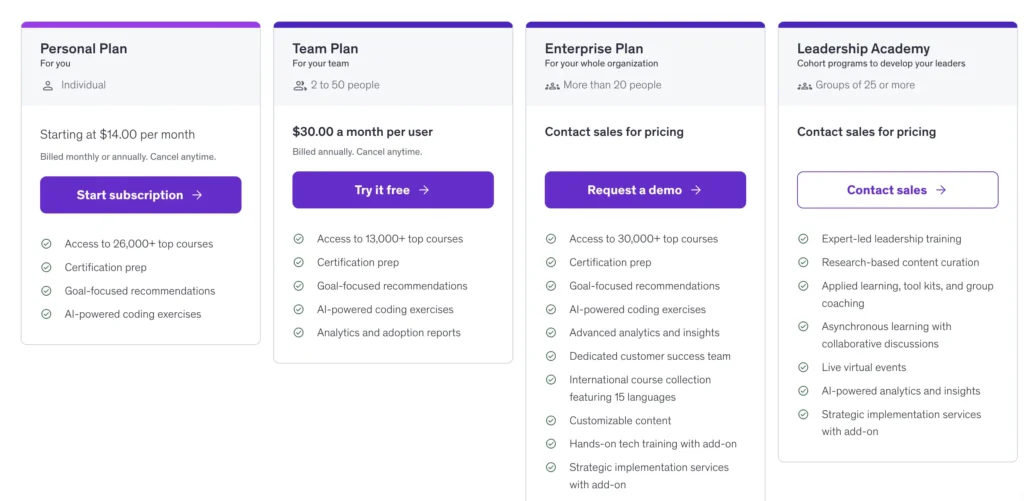
Udemy courses are listed between $14 and $199, but frequent sales drop prices to $10 to $25.There is no subscription required. You pay once and keep lifetime access.
Best For
- Hobby learners
- Beginners exploring topics
- Budget-conscious students
- Skill-based training
Feature-by-Feature Comparison
Pricing
- Udemy wins for affordability. You can buy a course for $15 during sales. If you only need one specific skill, this works well.
- Coursera is more expensive, especially for specializations or professional certificates. However, the structured programs and university credentials justify the cost for serious learners.
If your goal is a recognized certificate, Coursera offers stronger value.
Ease of Use
Both platforms are user-friendly.
- Udemy feels simple and straightforward. Buy a course, start watching.
- Coursera feels more structured. There are assignments, quizzes, and deadlines. Some learners prefer this accountability.
- If you want flexible, no-pressure learning, Udemy feels easier.
- If you want guided progression, Coursera feels more organized.
Performance and Course Quality
This is where Coursera stands out.
Since Coursera partners with universities and global companies, content quality is generally consistent and professional.
Udemy quality depends on the instructor. Some courses are excellent. Others feel basic or outdated.
If consistency matters, Coursera is more reliable.
Customer Support
Coursera offers structured support and clear communication channels.
Udemy support mainly handles payment and technical issues. Instructor response varies.
For academic-style support, Coursera performs better.
Refund Policy
Udemy offers a 30-day refund policy on most courses.
Coursera provides refunds within 7 to 14 days depending on the purchase type.
Udemy wins slightly in flexibility here.
Which One Is Better for Beginners?
For absolute beginners who are exploring new topics casually, Udemy is often easier.
Example: Someone curious about photography or Excel basics can buy a low-cost Udemy course and start immediately.
However, beginners who want guided career development benefit more from Coursera.
If someone wants to start data analytics and build a career path, Coursera’s structured programs from companies like Google provide stronger direction.
So the answer depends on the goal. Casual beginners lean toward Udemy. Career-focused beginners benefit more from Coursera.
Which One Is Better for Advanced Users?
Advanced learners usually want:
- Recognized certifications
- Deep specialization
- Career credibility
Coursera clearly performs better here.
Professional certificates, university-backed programs, and even degree pathways provide more weight on resumes.
Udemy can help advanced users learn niche tools, but it does not carry the same professional recognition.
If someone is serious about long-term growth, Coursera is the smarter choice.
Real-World Use Cases
Case 1: Career Switch to Data Analytics
A marketing executive wants to move into data analytics.
Udemy offers short technical courses. Helpful, but not structured.
Coursera offers a full professional certificate program designed by Google. It includes projects and assessments.
Coursera wins for structured career transition.
Case 2: Learning a Hobby Skill
Someone wants to learn guitar for fun.
Udemy offers many low-cost beginner-friendly options.
Coursera is less hobby-focused.
Udemy wins here.
Case 3: Resume Building
If your goal is to add credentials recognized by employers, Coursera provides stronger authority.
University-backed certificates carry more weight than marketplace completion badges.
Is Coursera Better Than Udemy in 2026?
For casual learning and affordability, Udemy performs well.
For career growth, professional credibility, and structured learning, Coursera offers more long-term value.
So is Coursera better than Udemy?
For serious learners, yes.
It provides better academic structure, higher content consistency, and credentials that employers recognize.
Final Verdict: Coursera vs Udemy
Both platforms serve different audiences.
Udemy is affordable and flexible.
Coursera is structured, career-focused, and academically stronger.
If your goal is quick skill learning at a low cost, Udemy works fine.
If your goal is career advancement, credible certifications, or structured programs, Coursera is the better investment in 2026.
We recommend Coursera for most serious learners because of its long-term value and professional recognition.
You can check the latest discount for Coursera on our website. We regularly update working coupon codes for Coursera and Udemy.
FAQs
1. Is Coursera better than Udemy for career growth?
Yes, Coursera provides recognized certificates and structured programs that help with career advancement.
2. Does Udemy offer accredited certificates?
No. Udemy certificates are proof of completion but not accredited by universities.
3. Is Coursera worth the money in 2026?
If you are serious about professional development, Coursera is worth the investment.
4. Which platform is cheaper?
Udemy is cheaper due to frequent discounts and one-time purchase pricing.
5. Can I get refunds on both platforms?
Yes. Udemy offers 30 days. Coursera typically offers 7 to 14 days depending on the plan.
6. Which platform is better for beginners?
Udemy is good for casual beginners. Coursera is better for beginners who want structured career paths.